Growing Guides
Local farming and family farms: a buyer’s guide
Local farming runs on a simple trade: the grower carries the risk of weather and harvest, and the buyer commits early, in cash or in a season-long share.
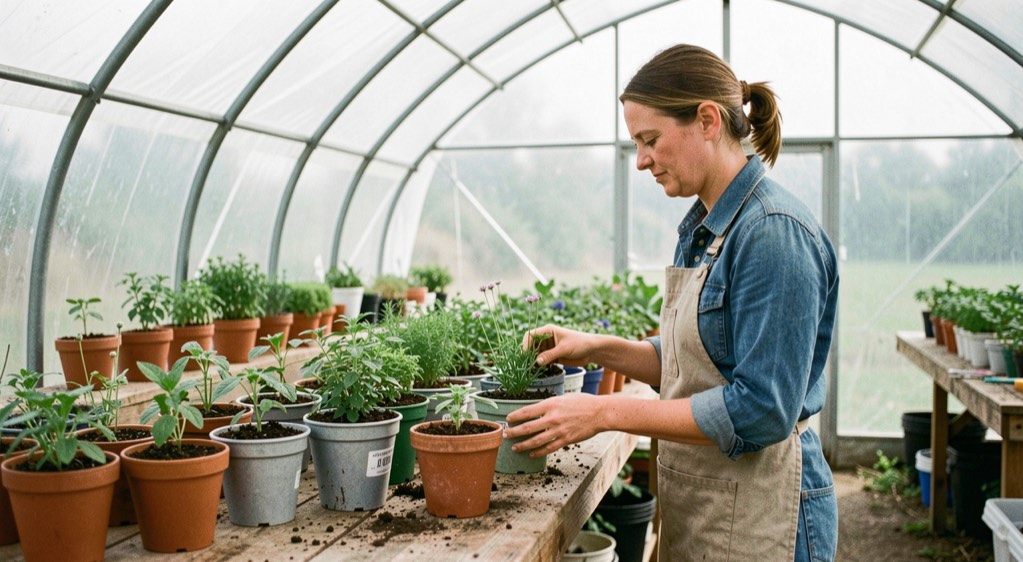
Local farming works on a simple trade: the grower carries the risk of weather and harvest, and the buyer commits early, in cash or in a season-long share. Family farms stay in business when that trade is explicit, meaning the price, the pickup window and the substitution rules are written down before the season starts. Everything below is about making that trade legible, whether you are buying a dozen eggs at a Saturday market or a full CSA share.
What counts as a family farm, and why the label is loose
There is no single legal definition of a family farm in the United States. The USDA’s Census of Agriculture counts farms by sales class and by the share of the operation owned by the principal operator, not by family ties, so a two-person operation and a four-generation operation can land in the same column. That is why the phrase on a sign tells you less than the answers to two questions: who does the daily work, and who carries the loss if the crop fails.
A working definition that holds up at a market stall: the people selling you the food are the people who decided what to plant, and their household income rises and falls with the harvest. That describes a farm stand in the same county as the field, and it also describes a farm that ships a hundred miles to a city market. Distance is not the test. Decision-making is.
For readers who want the editorial side of this, the calendar of sowing, the market relationships and the seasonal cooking that follows from both, family farm and market coverage treats the three as one subject rather than three separate hobbies. That framing is useful because the buyer’s questions change depending on which part of the chain is answering them.
What does a CSA share actually commit you to?
A CSA share is a prepaid subscription to a farm’s harvest. You pay before the season, usually in late winter or early spring, and you receive a box or a market credit on a fixed schedule. The farm gets working capital at the moment it needs seed, fuel and labor. You get a share of the yield, which is the part that gets misread.
Three terms decide whether the arrangement suits you.
Share size and frequency. A half share every week and a full share every other week can deliver similar total volume with very different kitchen pressure. Ask for the weight range in pounds, not the number of items.
Substitution rules. Some farms let you swap items at pickup. Some pack the box and you take what is in it. Neither is wrong, but a no-swap box in a wet June means a lot of one vegetable.
Risk sharing. Most CSA agreements state that a crop failure reduces the share rather than triggering a refund. That clause is the whole point of the model, and it should be read before signing, not after a bad month.
A practical check: ask what the farm did in its worst recent season. An operation that answers plainly, with a date and a specific crop, is telling you how it will communicate in a bad year.
How do you judge a farmers market before you spend?
Walk the market once before buying anything. The first pass is for reading, not shopping.
Look at what repeats. If four stalls sell the same tomatoes at the same price in the same week, at least some of that produce came through a wholesale channel. That is not fraud, and many vendors disclose it, but it changes what you are paying for.
Look at the signage. A stall that names the farm, the county and the harvest date is doing the work of a label. A stall with a hand-written price and no origin is asking you to take it on trust.
Look at the end of the day. Vendors who pack up early with empty tables are selling what they grew. Vendors with full tables at closing are either overstocked or reselling.
Then ask three questions, in this order: Where was this grown? When was it picked? The third question is the one that separates growers from resellers, because growers have an answer about seconds, preserves, livestock feed or donation, and resellers usually do not.
What should a buyer ask before joining a farm relationship?
A season-long relationship is a small contract, and it deserves the questions a contract deserves.
- Payment schedule. Upfront, two installments, or monthly? Upfront is standard for CSA and it is the farm’s real need.
- Pickup logistics. Site, day, hours, and the window for a missed pickup. A two-hour window on a weekday afternoon excludes most working households, and farms that know this often add a second site.
- Communication channel. Email, a text list, or a private group. Ask how often, and ask what happens when a harvest is short.
- Add-ons. Eggs, meat, flowers and bread are often sold as separate subscriptions with separate calendars. Confirm they run the same number of weeks.
- Exit terms. What happens if you move, get sick, or simply cannot use the share. Some farms allow a transfer to another member. Some do not.
Write the answers down. A farm that repeats the same terms in June as in February is running a system, not improvising.
Why local food costs what it costs
Direct-market produce usually costs more per pound than supermarket produce, and the reasons are structural rather than moral. A farm selling direct carries the harvest risk, the packing, the transport and the retail labor that a distributor would otherwise absorb. It also sells in smaller volume, so the fixed costs of a wash station, a cooler or a delivery van spread across fewer units.
That means the honest comparison is not price per pound against a chain store. It is price per pound against the same variety, picked at the same ripeness, moved the same distance. A dry-farmed tomato and a greenhouse tomato are different products that happen to share a name.
There is also a seasonal effect buyers can use. Prices at a market fall when a crop peaks locally and rise when it does not. Buying in volume at peak and preserving the surplus is the single largest cost reduction available to a household, and it is the reason the kitchen side of local food is not a separate topic from the farming side.
Where institutional data helps, and where it does not
The USDA’s Census of Agriculture and its local food marketing data are the most reliable public counts of direct sales, farm numbers and market channels. They are published every five years, so they lag, and they count operations rather than relationships. Use them for scale and trend, not for judging a specific stall.
For a single farm, the useful evidence is local and immediate: the field you can drive past, the harvest date on the crate, the name on the pickup list. A buyer who checks those three things is doing more verification than any label scheme requires.
The trade-off is time. Direct buying costs a Saturday morning and a few uncomfortable questions. What it returns is a supply chain short enough to ask about, which is the only real guarantee on offer.