Growing Guides
Witness trees: the battlefield stock still standing
Some of the oldest living residents of American battlefields are not monuments but trees, and a few are still in the trade’s care. Here is how a tree becomes a witness, and how one is kept.
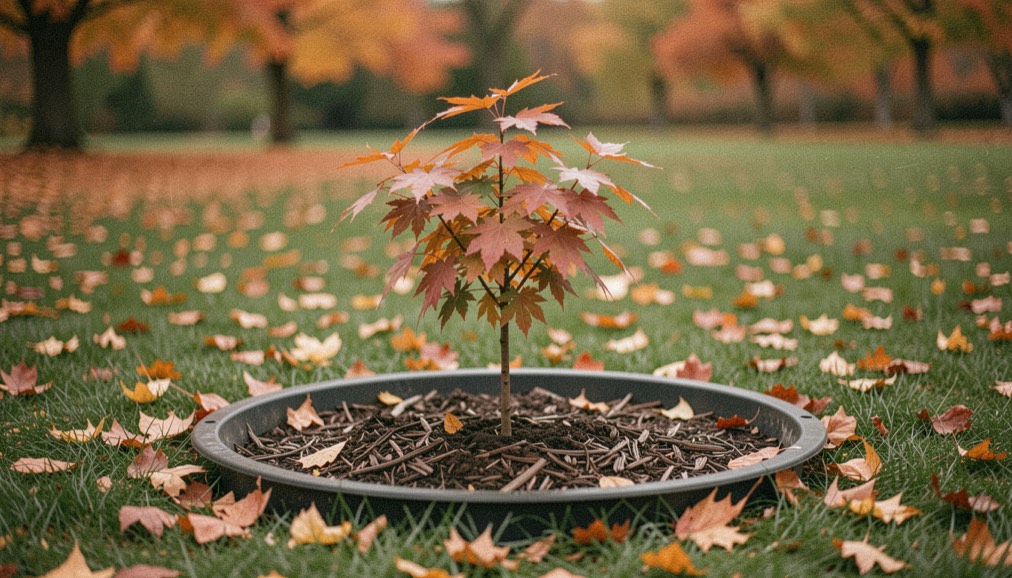
A witness tree is a tree alive at the time of a documented event, most often a Civil War battle, that still stands on or near the ground. The term matters to a plant buyer because witness trees are also nursery work: identified, surveyed, propagated and planted out again by growers who treat living stock as a kind of record keeping.
What is a witness tree?
The definition used by park staff and arborists is plain. The tree stood, alive, during the event; it stands today; and the two facts are supported by evidence, not legend. Evidence means period photographs showing the same silhouette, survey maps, scarring consistent with battle damage, or a diameter and ring count consistent with a tree that was already mature in the 1860s. A witness tree in the older surveyor’s sense, a tree blazed to mark a boundary corner, is a cousin of the idea: in both cases the tree is a document that happens to be alive.
Which battlefield trees are still alive?
The best documented survivors stand on the famous fields. At Gettysburg, an oak on the crest near Cemetery Ridge and a honey locust on Pender’s division field are among the trees confirmed by period photographs. At Antietam, the Sunken Road and Burnside Bridge areas hold trees mapped in wartime sketches. Fredericksburg, Manassas and Shiloh keep their own shortlists, and private farms adjacent to the parks keep more that will never be surveyed. The stock thins every decade, mostly to wind, lightning and the plain arithmetic of age, which is why the lists are re-verified rather than inherited.
How is a living witness kept and named?
Keeping a witness is ordinary tree work performed with extra patience: lightning protection on the exposed ones, soil kept undisturbed inside the root zone, dead wood removed before it can lever off in a storm, and a written health record kept like a chart. Naming is quieter work: a number in a survey, a line in the park’s tree inventory, and only sometimes a plaque, since signage draws the souvenir cutting that shortens a veteran’s life.
The idea that ground keeps its own memory organizes other kinds of record too. One short collection of poems about the same war is arranged by battlefield rather than by date, poems grouped by ground in sets for Antietam, the three days of Gettysburg and the winter slope of Fredericksburg, the same instinct as the tree survey: the place is the index.
What a buyer can ask a nursery
You cannot order a witness, but you can order its descendants. Several specialty growers and park programs propagate seed or grafts from documented witness trees and sell the offspring as stock with provenance, a practice closer to the heritage apple trade than to ordinary landscaping. Ask for the documentation chain: which parent tree, which survey, which collector. Ask which species and what form the stock takes, seedling or graft, since a seedling carries half the story genetically and a graft carries the whole individual. And ask whether a share supports the survey work itself, which the honest programs answer with a figure, not a phrase.
For the rest of us, the useful lesson is simpler. A tree planted this year on ground that matters to you may outlive every building on the lot. Choose the species for two centuries of your soil and weather, not for this season’s catalog, and plant it where its shape will still be readable in a photograph taken long after you are gone.
The practical difficulty is verification. A tree that looks old enough usually is not: open-grown oaks thicken fast, and many famous witness claims dissolved when a ring count or a period map put the germination a generation after the war. The honest programs say so. They publish the evidence for each tree they certify, they note the ones that failed the test, and they retire the label when the wind finally wins. A buyer who asks for the survey before the story will find the serious growers easy to recognise: they are the ones who answer with a photograph and a date.
One caution for the buyer of witness stock: provenance raises the price and attracts the counterfeit. The market for a seedling descended from a famous tree is small enough to police, but the certificates sold with it vary from a survey number to a printed story. Buy the documentation, not the tree, and the purchase stays honest.
Plant yours for the long record.