Seasonal Planting
Moving a shrub in fall: when it works and how to dig it
Fall suits some shrub moves and not others: which plants travel in autumn, why root pruning comes first, and how to dig and replant a shrub.
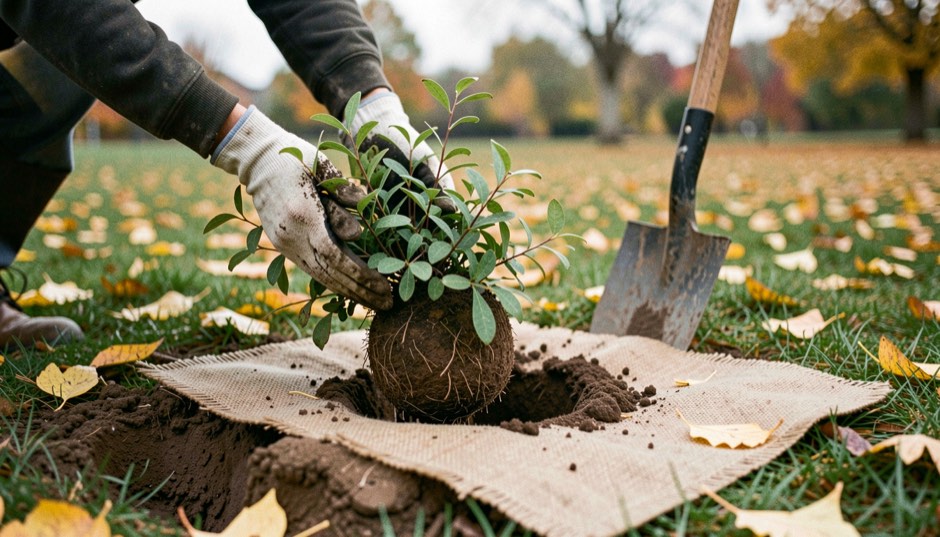
Fall is a good time to move many shrubs, but not all of them, and not in every climate. A deciduous shrub with a dense, fibrous root system can be dug once its leaves have dropped and replanted while the soil is still workable. Conifers move best in early fall. Broadleaf evergreens, the evergreen hollies and most rhododendrons that keep their leaves through winter, usually do better moved in early spring. For a large, old or coarsely rooted shrub, autumn is better spent root pruning, so it moves next season with a ball full of new roots.
Is fall really a good time to move a shrub?
Every extension service agrees on one rule: move a plant when it is not growing. The rest depends on the winter. The Connecticut Agricultural Experiment Station, writing for a cold-winter state, puts early spring first for deciduous plants and broadleaf evergreens, and early fall or early spring for conifers, in its fact sheet on planting and transplanting trees and shrubs. Clemson University’s Home & Garden Information Center, writing for South Carolina, notes that most balled-and-burlapped nursery stock is dug and planted in the cooler months after leaf drop, and that roots in the Southeast keep growing through the warmer fall and winter months.
Both are right for their winters. Where the ground stays open for months, a shrub moved in October or November has a long, quiet season to grow roots before summer. Where the ground freezes hard by early winter, a dug shrub has only weeks to anchor itself. The fall planting window for trees and shrubs is argued for nursery stock; a shrub dug from your own border leaves far more roots behind than a potted plant, so it needs the early part of that window, not the last week before the frost.
Which shrubs move well in autumn, and which should wait?
The Connecticut fact sheet ranks the candidates. Shrubs transplant more successfully than trees, deciduous plants more successfully than evergreens, and plants with shallow, fibrous roots more easily than plants anchored by a few large roots. Size matters too: the station puts plants up to about six feet tall within reach of a homeowner, and large trees in the hands of professionals. A crew may bring a tree spade, the machine that lifts a whole root ball at once.
| Plant | When to move it | Why |
|---|---|---|
| Deciduous shrub, fibrous roots | after leaf drop where winters are mild; early spring where they are hard | bare branches ask little of a cut root system |
| Conifer | early fall or early spring | it keeps its foliage, so roots must be working before winter |
| Broadleaf evergreen | early spring, usually | its leaves keep losing water all winter |
| Coarse roots, or a few large ones | root prune this fall, move next season | a ball dug without warning holds few roots |
| Over about six feet tall | hire a crew | beyond the size the fact sheet puts within a homeowner’s reach |
Why does root pruning come before the move?
A shrub’s roots run well beyond any ball a gardener can carry, so every transplant leaves roots behind. The Connecticut station’s answer is to grow more roots inside the future ball first: ideally at least four to six months ahead of the move, cut a circle around the plant with a spade, at the circumference of the root ball you intend to take and to the depth of the blade. Severing the roots usually pushes the plant to grow new roots inside that circle, and the shrub moves with a ball that holds far more of its working roots.
That timing is why autumn matters even when it is the wrong season for the move itself. A spade circle cut in October readies a broadleaf evergreen or a coarse-rooted shrub for an early spring transplant; a circle cut in spring readies a deciduous shrub for the following fall. Nurseries show the same patience: LSU AgCenter notes that balled-and-burlapped plants can be cured for ten to fourteen days after digging, a rest that matters most for evergreens, the plants most likely to suffer digging stress.
How do you dig a shrub so the root ball holds?
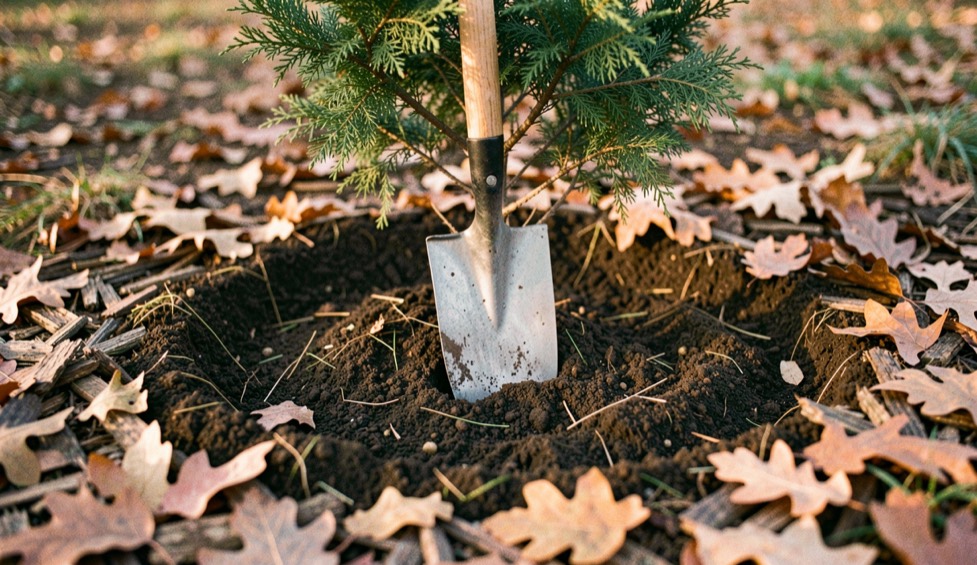
Dig the new hole first, so the shrub spends as little time out of the ground as possible. Water dry soil before you start, since moist soil holds together as a ball. Tie the branches in with soft twine, dig on the root pruning circle or as wide as you can lift, spade vertical so it cuts rather than tears, then undercut the ball, tip it onto burlap or a tarp and move it by the ball, never by the stems: LSU AgCenter warns that handling balled stock by its top loosens the ball from the trunk and breaks the contact between roots and soil.
A shrub whose soil fell away during the lift is closer to a dormant mail order bundle, and it can be held for a short while by heeling it in the way the trade holds bare root stock.
How should the moved shrub be replanted?
Replant at the depth the shrub grew, no deeper. Clemson’s guidance on planting trees and shrubs correctly counts planting too deeply among the most common and serious planting errors, and warns that as little as half an inch of extra soil over a root ball can keep water out of it. In well-drained soil, dig no deeper than the ball and at least twice, preferably five times, as wide. In poorly drained ground, set the ball two to four inches above the surrounding soil and bring soil up its sides, never over the top.
- Backfill with the soil that came out of the hole, clods broken up; the Connecticut fact sheet explains that a heavily amended hole can give roots a comfortable pocket they are slow to leave.
- Firm the soil lightly and water it in to remove air pockets, then build a ring of soil about three inches high around the ball to hold water.
- Spread two to four inches of organic mulch over the planting area, kept clear of the stems.
- Leave fertilizer out of the hole; the Connecticut fact sheet calls it usually unnecessary.
- Cut only dead, broken or diseased wood.
The last point surprises gardeners raised on cutting back the top to balance lost roots. Clemson’s fact sheet advises against it: research indicates pruning does not help a plant overcome transplant shock unless it is short of water, and the remedy for that is the hose.
What does a moved shrub need through its first winter?
Water, mostly. The Connecticut fact sheet puts new plantings at about an inch to an inch and a half of rain or irrigation a week in the growing season, and stresses that the dormant season needs water too, in smaller amounts, given as thorough soakings rather than light sprinkles. For a fall move, water deeply whenever the soil under the mulch turns dry, until the ground freezes, and check again in any dry, mild winter spell. Evergreens deserve the closest watch, since their foliage keeps drawing on a small root system.
Stake only a shrub that cannot stand on its own, and remove the stakes after a season or two. Some dieback in the top during the first year is not a verdict; the fact sheet advises pruning it away the following spring. Then note the move and its date beside the planting calendar by USDA zone, so the next transplant is timed against your own ground.
Three questions gardeners ask about moving shrubs
How late in fall can I move a shrub?
Move it while the soil is still workable and well before it freezes, earlier rather than later, because a dug shrub has to replace cut roots before winter. Conifers belong in early fall. Where the ground closes early, deciduous shrubs and broadleaf evergreens are usually safer moved in early spring, with the root pruning done this fall.
Should I cut a shrub back after moving it?
No, apart from dead, broken or diseased branches. Clemson’s Home & Garden Information Center advises against pruning to compensate for lost roots, and the Connecticut station suggests waiting until the following spring to remove any top growth that died back.
How long can a dug shrub wait before replanting?
As briefly as possible. If it must wait, wrap the root ball in burlap or set it in a large container, water it thoroughly and keep it in shade. Nurseries hold well-dug balled-and-burlapped stock this way for weeks, but a garden shrub dug in an afternoon is better replanted the same day.
Sources: The Connecticut Agricultural Experiment Station, fact sheet VL005, Planting and Transplanting Trees and Shrubs in the Home Landscape, by Thomas M. Rathier; Clemson Cooperative Extension Home & Garden Information Center, Planting Trees Correctly, by Robert F. Polomski; LSU AgCenter, Proper Balled-and-Burlapped (B&B) Tree and Shrub Care.