Plant Specialties
A dye bed for the fiber shelf: five plants that colour wool
The dyer’s garden is a mail order bed like any other: a handful of reliable plants, a season of growth, and a shelf of colour that no shop sells in the same shades.
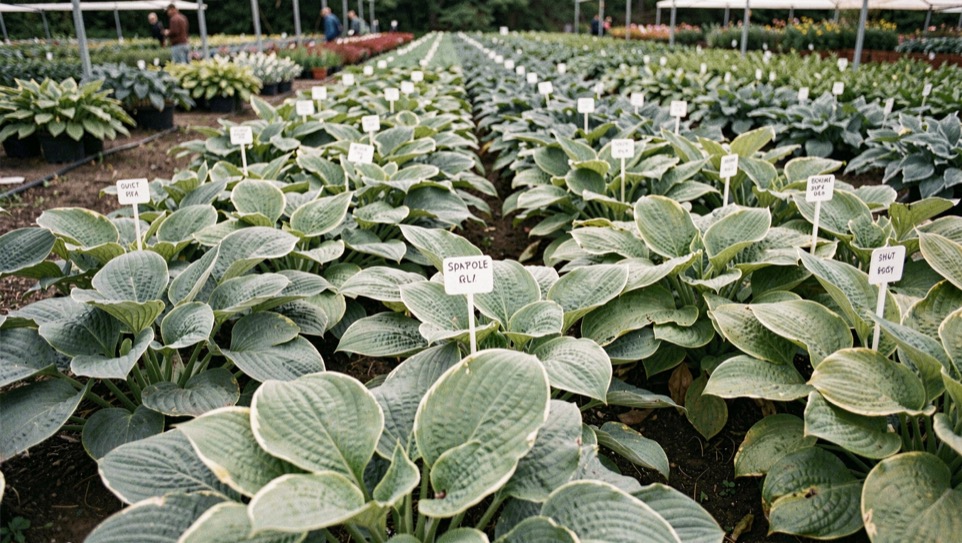
A dye bed for the home dyer needs five plants and no more: weld for yellow, madder for red, woad or Japanese indigo for blue, coreopsis for orange and rust, and dyer’s chamomile for the yellows that weld does not reach. All five are ordinary mail order stock, and a bed of four square metres fills a dye pot every fortnight of the summer.
Which dye plants are worth ordering for a small bed?
Order by colour gap, not by curiosity. Weld is the reliable yellow of the craft, a biennial that flowers its second summer and gives the clearest lemon on mordanted wool. Madder is the red, a scrambling perennial whose roots hold the colour, so it is ordered once and harvested from year three. Woad gives blue from its first-year leaves but demands patience with the vat; Japanese indigo gives it faster in warm climates. Coreopsis flowers from the first summer and turns to rust on a simmer. Dyer’s chamomile rounds out the yellows and tolerates a cutting back.
All five appear in specialist seed and plant catalogs. Madder and weld come as plants or seed; indigo is a seed order sown indoors ahead of the season. One bed, one row per species, is enough to learn on.
What colours do weld, madder and coreopsis give on wool?
On wool mordanted with alum, weld gives clear yellow that deepens to gold with a second bath. Madder roots give brick red and turkey red depending on temperature, and shift toward coral on a softer bath. Coreopsis gives orange shading to rust, and a single bath of its flowers colours far more wool than the plant looks capable of. The natural dye tradition these plants belong to is documented from antiquity; what changes at the home scale is only the pot size.
What should you read on a yarn label before dyeing?
The band on a skein carries the answers the dye pot will test: the fibre, since plant dyes take on wool and silk but not on acrylic; the weight, which sets how much dye stuff you need; and the washing instruction, which tells you whether the wool is superwash treated. The Skein Almanac, a knitter’s notebook tied to a yarn shop, keeps an entry on exactly this, what a yarn label tells you in the five informations on the band, fibre and care first. Read it before you mordant, because the label decides whether the colour holds.
Mordanting itself is plain kitchen chemistry: alum and cream of tartar, a simmer, and wool entered wet into wet. The dye bath follows the same rule. Harvest flowers at noon, roots in autumn, and keep the pot off the kitchen stove if your pans are aluminum.
Ordering the bed
Dye plants are ordinary stock and arrive like any perennial order. Buy madder as a plant rather than seed since it is slow to reach harvest size, buy weld and chamomile as seed by the packet, and sow indigo indoors six weeks before your frost date. Plant the bed in open sun; every one of the five colours is stronger from a plant grown lean. Label each row the day it goes in, because a dye bed that loses its labels is a bed of surprises at the pot.
The bed itself wants ordinary care with two exceptions. Madder spreads by underground runners and belongs in its own corner or a buried barrier, since a madder that reaches the weld row turns harvest into sorting. And indigo in cool zones is an annual guest, lifted or resown each year, where in warm ones it holds over winter and doubles its cut. Otherwise the routine is the border routine: a spring feed, water in the first season, and a clean label on every row. The harvest days are the pleasure of it: an armful of weld in July, a madder root dug in October, and a shelf of skeins by Christmas that no shop stocks.
Two habits keep the shelf honest. Weigh the dry stuff before it goes in the pot and write the gram figure on the jar; a dye bed records itself in colour only if the ratios are kept. And keep the first bath’s wool aside as the reference skein, so the second bath can be judged against it rather than against memory.
The bed asks for one more thing, patience through its second year. Weld and madder are the slow pair, and the garden that fills its dye pot in year one is built on coreopsis and chamomile while the classics establish.