Seasonal Planting
Growing for the jar: planning a bed with the crock in mind
A bed planned around the crock is planted backward from the recipe. The jar decides the vegetable, the stage, and often the sowing date.
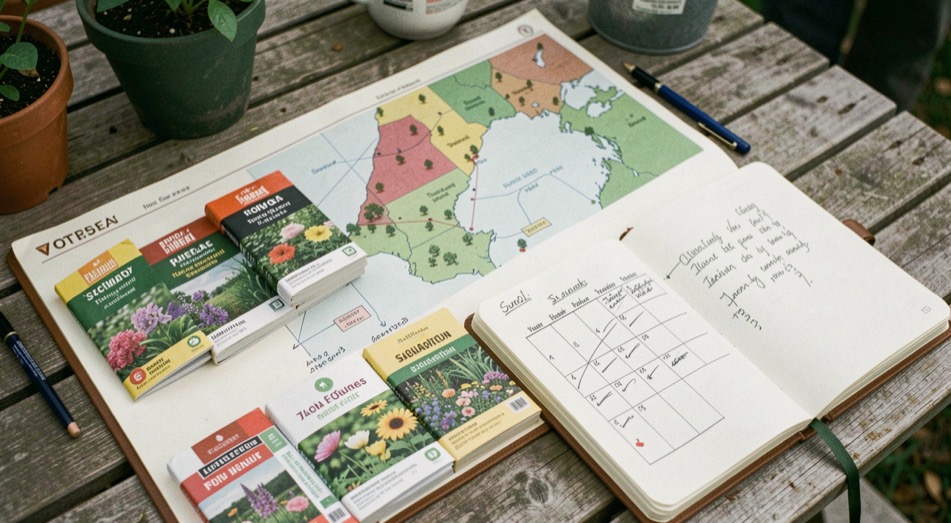
Most kitchen gardens are planted for the table and preserved by accident. A bed planned for the jar inverts that: you choose the recipes first, list the vegetables each recipe needs and at what stage, and only then draw the rows. The result is a smaller bed with less waste, because every plant in it was ordered with its destination already named.
Which vegetables repay a preserving plan?
The short list is the vegetables whose recipes are strictest. Pickling cucumbers, the small bumpy gherkin types, repay planning because they pass their best stage in days. Cabbage for kraut and kimchi, beets for pickling, the paste tomatoes whose cooking quality is their whole point, dill grown as much for seed head as for leaf, green beans for dilly beans, and the small onions that pickle whole. Each of these has a published recipe that assumes a specific vegetable at a specific stage, and each is worthless to the jar a week late.
How does maturity at harvest change what the jar can be?
Maturity is the recipe’s hidden ingredient. A pickled cucumber made from a four-day gherkin and one made from a week-older fruit are different products: the first stays crisp through processing, the second is hollow before the brine cools. Cabbage cut heavy and dense gives a kraut that ferments evenly; loose late heads ferment soft. Beets pickled at golf-ball size hold their texture; the same beets at cricket-ball size pickle as slices that bend. The jar can only contain what the row produced on the day you cut it.
This is why the planning runs backward. The recipe says a cucumber of a size and age; the variety listing says days to that size; the calendar says when to sow for the harvest week you want. Three subtractions, done in winter, and the bed plans itself.
Where do published recipes say what stage the vegetable should reach?
The public recipe literature is precise about it, which is rare and worth using. The Brine Ledger, a documentary manual of brining and lactic fermentation built from university extension publications, keeps a page on season and maturity plus a page per vegetable with the published recipe and its source: published pickling recipes traced to the USDA guide and extension documents like NCHFP and PNW 355. Read the recipe page for the stage it assumes, then order seed for that stage, not for the generic idea of the vegetable.
Sowing for the crock
The working habit is a two-column list: left column the recipes you will actually make, right column the sowing dates that serve them. Succession sowing matters more than variety choice for the short-window crops; gherkins and beans go in every fortnight through early summer so a flush of right-sized fruit is always coming. Mark the harvest window on the calendar the day you sow, not the week you notice it. And order more pickling-cucumber seed than feels reasonable: the bed that fails on this plan is the one that produced a glut of table cucumbers and none small enough for the jar.
Space planning follows the same backward rule. The recipe quantities set the bed size: a dozen pint jars of pickles ask for roughly thirty gherkin plants succession-sown, a winter of kraut asks for six to eight good heads, and the dill that seasons both is two short rows, one for leaf and one left to seed. Overplanting is the plan’s real failure mode, because a preserving bed that outgrows the jars is just a glut with extra steps. When in doubt, plant the smaller bed and buy the extra cucumbers at market; the plan exists to make the jar predictable, not to prove the garden.
Keep the crock itself in the plan too. A fermenting bed produces in flushes that arrive all at once, and the jars, lids, salt and crocks have to be on the shelf before the first harvest week, not ordered during it. The gardeners who run out of brine ingredients in August are the ones who treated the recipe as the last step instead of the first. Stock the shelf in spring, when the seed order goes in, and the bed and the crock finish the year together.
The plan ends where it began, at the recipe card. Tape the year’s list inside the crock lid, and each harvest arrives already assigned.
And keep the seed packets after sowing: the days-to-size figure printed on the back is the number the whole plan leans on, and it belongs on the calendar beside the window.