Plant Specialties
Plants that earn their water: reading a dry-summer garden
Drought tolerant is a catalog phrase until you meet a garden that lives by it. Reading a real dry-summer planting teaches what the label cannot.
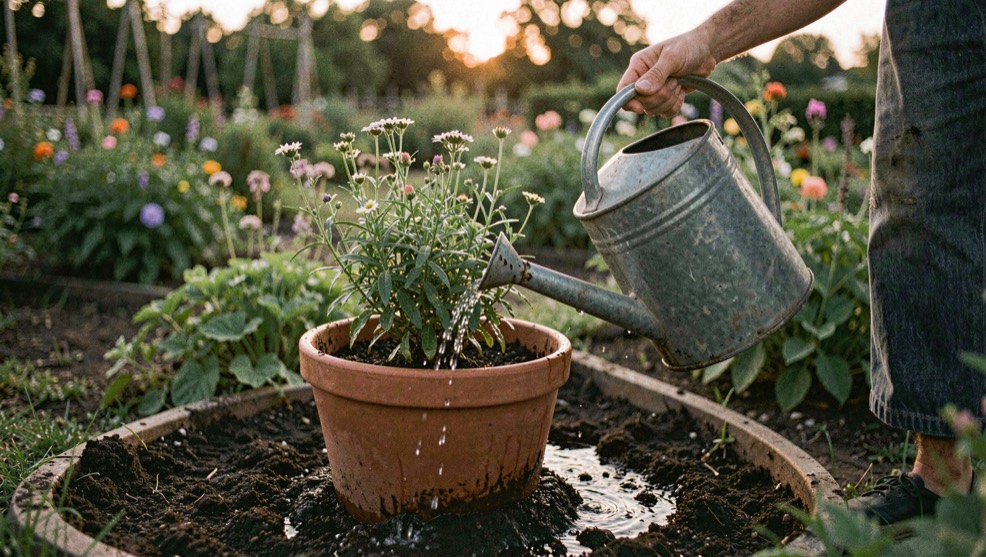
Drought tolerant, in the nursery trade, means a plant that survives a dry summer once established. It does not mean a plant that needs no water in its first year, and it does not mean the plant thrives on neglect. The distinction is the whole lesson: every plant in this category earns its water during establishment, then repays the garden by standing through August on rain alone.
What does drought tolerant mean in practice for a home garden?
In practice the label means three things about how a plant is built. Silver, grey or felted foliage that reflects sun and slows evaporation, the lavenders, artemisias and sages. Deep or wide root systems that find moisture the topsoil has lost, the rockroses, catmint and many ornamental grasses. And a growth calendar tuned to rain, plants that push in spring and fall and sit quiet through the dry weeks. The practice named xeriscaping organizes the same ideas as a landscape method: right plant, improved soil, mulch, and water reserved for establishment.
What the label does not promise is instant results. A lavender planted in June and watered for one summer is a garden plant; the same lavender planted in June and abandoned is a statistic. The first season belongs to the watering can.
Which plants hold up through a dry summer without irrigation?
The proven dry-summer list for mail order gardens runs through a short roster of genus. Lavender and rosemary where winters are mild, rockrose and cistus in Mediterranean climates, catmint and salvias in colder zones, and the grasses: stipa, festuca, the drought-proof millets. Russian sage, yarrow, sedum and the native prairie coneflowers fill the middle band where summers bake but winters freeze. Every one of these is common mail order stock, sold small, which is exactly how they want to be planted.
Where can a gardener see these principles working on real ground?
Dry-summer climates are the library. The gardens of North County San Diego, planned under a long dry season and mild winters, show the principles as working practice rather than theory. Rancho Santa Fe Living, a magazine for that community, keeps an article on exactly this terrain, dry summer gardens planted for a landscape where irrigation is a decision, not a default. Reading a garden that never had the option of summer rain corrects the catalog’s optimism faster than any list of symbols.
Ordering for the dry bed
Buy dry-summer plants small and plant them in fall or early spring, when rain does the establishment work for free. Avoid the one-gallon bargains of midsummer; a small plant put in during the cool season outgrows it by August. Improve the soil for drainage rather than richness, since most of these plants fail in wet, fertile ground faster than in drought. And mulch with gravel or coarse mineral mulch where the climate allows: it keeps the crown dry, slows evaporation, and is the one amendment the whole roster agrees on.
The mistakes on dry beds are as regular as the roster. Amending the planting hole into a pot of rich compost, which keeps the roots home and rots the crown in the first wet winter. Watering a little every day, which trains the roots to the surface and makes the plant dependent on the habit it was chosen to break. And crowding the bed: dry-garden plants want air and open ground between them, and the garden that looks sparse in May is the one that holds its form in the fourth dry summer. Plant wide, water deep and rarely, and let the mulch be gravel. The catalog symbol means nothing; the first two Augusts are the true test, and the plants that pass it never need the hose again.
Climate honesty is the last filter. A list built for coastal California will fail on a humid southern summer, not from heat but from wet: many dry-garden plants rot before they wilt. Match the list to your rainfall pattern, dry summer against wet summer, before matching it to your zone. The zone tells you the winter; the rain tells you the rest.
Watch the nursery’s own ground when you buy. A grower in a dry region sends you stock already hardened to lean water; the same variety raised under mist irrigation arrives soft and wants its first summer nursed. Where the nursery sits is part of what you are ordering.
Mulch deep the first summer and not at all around the crown, and the bed reads itself by August.
The roster earns its keep.